Saturday, April 7, 2012

"The Ruined Maid" - Not So Ruined, After All.


  Thomas Hardy’s “The Ruined Maid” deals with the topic of fallen women - women who deviated from the path of righteousness and had sexual relations out of wedlock. This doesn’t just apply to prostitutes, but any sort of women who engaged in this sort of activity; it didn’t necessarily have to be a repeated offense, a one time occurrence was enough for a woman to take a fall. These women were disgraced and ousted from society’s social structure, as no one truly respected these “ruined” women.
In this poem, Hardy attempts to show that fallen women (in this case, a prostitute) are not what society makes them out to be, but rather depicts them as classy, refined individuals. I interpreted the poem as an argument against the accusations that society made on these women. 
  “The Ruined Maid” is comprised of a conversation between a farm girl turned upper-class prostitute, Melia, and an unnamed girl that is implicitly from Melia’s old country home, possibly a close neighbor. Each stanza begins with the unnamed farm girl making some sort of explanation of how much Melia has changed since she left the farm life; she presents a previous memory of Melia followed by the Melia in the time of this poem. For example, in the second stanza, the girl remarks how Melia left them “in tatters, without shoes or socks (5),” but now she has “gay bracelets and bright feathers (7).” Each stanza follows the precedent made from the first, always expressing the change from one of lower-class or melancholy feelings to one of wealth, prosperity, and happiness. Melia’s repeated explanation is that it all comes with one’s ruin. 
          Hardy expresses through this poem how much better off  “ruined” women are - they are more prosperous, more educated, more refined, and more lively - than the average women. Hardy presents an entirely opposing view of what was typically thought of these kinds of women. He claims that these women aren’t down-trodden, dirty, unintelligent, and rough, but the direct opposite. 
When the unnamed farm girl in the sixth stanza (Beginning on line 21), expresses her want and desire for everything that Melia is - her polish, her wealth, and her attitude - Melia responds in a manner different than the rest of her previous answers. She says:


“‘My dear -- a raw country girl, such as you be,     (23)
Cannot quite expect that. You ain’t ruined,’ said she.” (24) (My italics)

  Melia says that the country girl can’t expect to have everything that she does, as it is something that comes when you are “ruined.” But more interestingly, she calls the girl “raw” (23). This choice in wording is curious; according to Merriam-Webster’s dictionary, to be raw is to be unprepared or imperfectly prepared for use; not being in polished, finished, or processed form (http://www.merriam-webster.com/dictionary/raw). By stating that the country girl is “raw,” Hardy is implicitly stating that Melia is beyond this stage. He’s implying that Melia is past this stage -  she’s prepared and perfectly prepared for use, she’s polished, finished, and processed. Clearly, Melia is in a better form than the country girl, and this form, as said by Melia, comes when one is ruined. Hardy says that she’s the better of the two.
  Is being “ruined” as bad as the word implies? Clearly, Hardy doesn’t think so. It doesn’t look like everyone was against these fallen women. 

The Ruined Maid


Thomas Hardy’s poem “The Ruined Maid” is an example of a dramatic monologue, which features a conversation between two women in late Victorian England. One is a farm girl and the other is a former farm girl who moves to the city. In the poem the farm girl speaks to Melia, the city girl, and notices how she has changed since her move to the city. The first girl—unidentified by name and yet living on a farm—addresses the other girl, named Melia, who answers in all but one stanza, the last one. The first girl has three lines of the quatrain, and Melia is given a one-line response in which she uses the word “ruin” in a couple of different ways.  Melia explains in each of the six stanzas of the poem that these changes indicate how she has become a “fallen woman.” The term fallen woman in Victorian culture applied to woman who were considered prostitutes, unmarried women who engaged in sexual relations with men, victims of seduction, adulteresses, as well as lower-class women who broke the rules.  

At this time there is a thin line between high prostitutes and well kept women. The poem clearly shows the freedom that is gained from being a prostitute compared to a factory worker that may work 15 or more hours of very hard labor that ruins the body. This work was also very dangerous since no protection was really offered in the factories. Despite all of the hard work and long hours, factory jobs could barely provide someone with proper amount of food and a livable sleeping area.

The country girl shows envy when admiring the prostitute and shows desire to escape to the city. Melia shows that her life used to be old fashion and full of work that was way too hard on a woman. She has replaced her old job for a different kind of labor called “sex” and she states that it has many advantages, like more food, more money, comfortable place to sleep at night, beautiful elegant clothing, etc. Melia seems to have an easier life from the “honorable” farm girl and Melia seems to enjoy her life even though she is doing something that is considered totally wrong and a sin in her society. Why is it that the respectful hard worker lives a much problematic life full of struggles, compared to a prostitute that is sinning and going against all the rules of being the ideal “Victorian woman”?

At this time a Victorian woman, or the “angel of the house” was defined by her role within the home, because the family served as a sanctuary for the "preservation of traditional moral and religious values" ("Victoria's Past").  The qualities valued by Victorian society in the ideal female were submissiveness, innocence, purity, gentleness, self-sacrifice, pa t i enc e, modesty, passivity, and altruism.  T he middle - class Victorian woman was to have no ambition other than to please others and care for her family. A woman was to be "a monument of selflessness, with no existence beyond the loving influence she exuded as daughter, wife, and mo t h e r"  ("Victoria's Past") .

The woman of the nine tenth century occupied a position of “duality” within Victorian culture, she was either “Madonna or Magdalene”, pure or ruined, familiar or foreign.  If a woman disobeyed the rules of what the ideal Victorian woman was, whether by sexual misconduct or criminal act, she was viewed as deviant and unnatural. She represented an “unsettling anomaly that both repelled and fascinated the Victorian.” Society viewed these woman as fallen, but in reality these women were victims of seduction and poverty.

The Victorian man, similar to the woman was only allowed to have sex within marriage, but a woman had to help men control their instincts and not have sex. Even though men were urged to control their sexuality, the Victorians believed that heterosexual desire was in a man’s nature. Therefore the society pleaded ignorance about a man’s inability to control his sexuality!! A man was allowed to seduce women, and in fact it was in their “nature” to do so, but all the responsibility fell upon the women to reject this seduction or else they were damned!

In my opinion the prostitute of Victorian times had a lot in common with the poor women trying to make a living in the urban job market. Many orphans on their own or extremely poor women became prostitutes out of necessity or a means to survive. Most of these women were desperately trying to survive in a world of very few opportunities. In “The Ruined Maid” we clearly see the appeal of becoming a prostitute compared to the living of the factory worker. 

What is very interesting is that Victorian women were not judged solely by their behavior but also by the way that they looked, a woman’s poor appearance could make her seem “fallen”. But at the same time, a woman that once used to be poor, now dressed in overly elaborate clothing and beautiful appearance could be labeled as “fallen”, since prostitution was the only way to buy such clothing from a woman of a poor background. The Victorian Era was extremely judgmental on women, in fact women had only two options; she was either a virgin or she was a mother, anything other than that was subject to critique and ridicule by the society. 


 "To the Life of the Victorian Woman." Victoria's Past. N.p., n.d. Web. 2 Apr 2012.     http://www.victoriaspast.com/LifeofVictorianWoman/LifeofVictorianWoman.html

Wednesday, April 4, 2012

One more unfortunate...Gone to her death!


           Found Drowned by George Ferederic Watts is one of the many Victorian paintings that focus on the fascination with “fallen women”. During this time period, prostitution was an easy way for women to make money, but at the price of being ostracized by society. Being branded as a “Fallen Woman” meant that a woman could not go on to enjoy a normal life. She was considered “stained”, unfit to marry into a good family or to raise one. These women were left with little options and as such, many chose to end their lives.
            The painting’s setting takes place at night time, with London’s landscape shown in the background. The woman’s isolation from society is apparent and she chooses to take her life during the night so that her actions will be hidden. The tragic circumstance of her being cast away by the city leads her to take this action. In an ironic way, in this solitude, she finally gains a sense of peace away from the city that stigmatizes her.  
          Death by drowning in the Thames River is symbolic of these “fallen women” being baptized and cleansed. Water has a purifying element; it is reminiscent of how John the Baptist would baptize people and absolve them of their sins. By portraying these women in this fashion, Victorian artists are showing mercy to these women and forgive them of their past transgressions. Their faces in these paintings show a serene, peaceful visage attained only in death and with peace of mind.
           The woman portrayed in this painting is beautiful, which is quite far from how drowned bodies would look. During this time period, suicide by drowning was a common thing and people were quite aware of the bloated and grotesque conditions these bodies were found in. Yet, Victorian painters chose to embellish these women’s tragic deaths. More people could sympathize with a tragic drowned maiden with an angelic face, rather than a hideous, decaying body.
            She is modest in clothing, a style the artist chooses to portray her in to emphasize that she is just a simple woman with tragic circumstances. In her life, she may have worn fanciful, colorful clothing that marked her as a prostitute, but in death, these plain clothes show that she is no different from the other women of society. In her hand so holds on to a necklace, perhaps a memento from a loved one that she could not part with even in death.
            The unfortunate lives of these women were made popular in paintings such as this and in poems like “The Bridge of Sighs” by Thomas Hood. Victorian society had popularized the notion that many “fallen women” would throw themselves off the London Bridge due to their shame and guilt. Painters and poets of this time period sympathized with these women, adorning their tragic fates by romanticizing their situations and deaths. They provide a criticism of society, bringing to light how these women are forced to choose this way of life: live in poverty, working in dangerous factories where they faced a crippling future or walk London’s nightly streets, offer themselves up to men for easy money and be branded a prostitute.

For more paintings on fallen women, visit: http://www.victorianweb.org/gender/fallen.html

Monday, April 2, 2012

O Rose thou art sick...


           “The Sick Rose” by William Blake is about a tainted “rose” and how it has been infected by an “invisible worm”. Underneath the horticultural façade of this poem, I've interpreted the “rose” as a maiden and the parasitic “worm” that saps her life can be thought of as either a man or a disease that man has brought upon her. Regardless of which ever one it is, the important detail about this is that “…his dark secret love/Does thy life destroy” (7-8).”    
            The image above is Blake’s illustration and he gives us a clue on the nature of this poem. In the image, you can see a woman emerging from a rose, looking healthy and happy with her face shown. She is surrounded by the flower, in a protective sort of way. The two other women above her are bent over and look ill or in despair. They are surrounded thorns, indicative of their pain. They are also hiding their faces, perhaps of their guilt and shame. The worm in the upper left corner has a phallic shape and it's position is much higher than the two women, suggesting the higher positions men held over women. 
Has found out thy bed
Of crimson joy:
And his dark secret love
Does thy life destroy   
                                                       (6-8)
            The second stanza is quite powerful because of the underlying meanings within it. The “worm” can then be thought of as a phallic symbol, when put together with “…thy bed/Of crimson joy:” (5-6). The “worm” is deriving pleasure from entering the “rose” at nighttime, a symbolism for intercourse. The reference to the “crimson joy”, when coupled with the statement regarding the bed, can be thought of as the losing of one’s virginity and the blood that flow when the hymen is broken.  
            Symbolically, if the “rose” does represent a girl, and the “worm” a man, in this time period if they are conducting a secret affair at night, then it can be easily guessed that the woman’s life is being destroyed in many ways. A woman can be thought of as a “fallen woman” if she engages in pre-marital sex, and therefore her reputation could fall, she would not be respected by society, marry into a respectable family and would be more likely to commit suicide for fear of having no future. In this way, her life is being destroyed.  
            Another view of this is to see the “worm” as a venereal disease that the woman has contracted due to the nightly visitations of a man. This is connected with the view that the “worm” enters the “rose” and slowly destroys her life. The woman could be unaware of the disease she has contracted, due to the worm’s “dark secret” (7). In this sense, her life is being destroyed because of the “crimson joy” that she has partaken in.
            In this poem, the speaker puts the blame of the rose’s condition on the nightly visitations of the worm. In other words, the speaker is actually letting the audience know that it is not the fault of the “rose” but rather that of the “worm”. In this sense, William Blake is telling us that the “worm” or in this case, the actions of a man are to blame for the downfall of this “rose”.

An Insight: A Closer Look at the Life of Oscar Wilde

 While reading The Picture of Dorian Gray I wondered more on the life of Oscar Wilde. What kind of man was he? What did other writers think of him? After writing such a novel how was he seen as an individual in the Victorian Era? I started searching and luckily came across an article written by Andrew McCracken titled, The Long Conversation of Oscar Wilde. McCracken gave an argument of how Wilde used Catholicism in his pieces, who didn't become part of the Catholic until the final days of his young life. 


The article gives a brief biography of Wilde's early life. Moving to Oxford University  from Dublin, Ireland  to study under novelist Walter Pater. While studying with Pater Oscar Wilde was captivated by the aesthetics of the Catholic ritual. Because of his new infatuation with the Catholic religion Wilde met a new Catholic by the name of David Hunter-Blair who wanted to convince Wilde to join the Catholic church. Unfortunately Wilde said that to join the Catholic church would mean for him to surrender his two greater Gods, "Money and Ambition." Wilde was only interested in the "romantic" part of the religion, not actually becoming a part of it. He had other things in mind.

It wasn't shocking to find out that when he first entered society in London they embraced him with open arms. He had great taste and opinion in art, he dressed finely, and lent his advice to the fashions. In the 1880s, to my surprise, Wilde got married and had two sons over the course of two years. He wrote short stories and novels for children that were well received and all seemed right in his world. That was until he reached the 1890s and his life began to spiral downwards. 

The year 1891 when The Picture of Dorian Gray was released to the public. It caused a frenzy because many claimed the book to be about Oscar Wilde's life himself. McCracken writes that the average book reviewer would say the novel was "a poisonous book" filled with "moral and spiritual putrefaction," saying that the book "hints...at disgusting sins and abominable crimes." Reading that I thought it was a harsh review of the book. Of course I had to take into consideration that during the Victorian Era, especially in high-class London society, the book wasn't exactly what Wilde should be writing about. The audience wasn't ready for this kind of book, they had their own sensibilities to think of. The one thing that really stood out me was McCracken's view on Wilde's novel, saying the theme of the book is  "a theme that lies at the heart of Catholicism: the ruin of the soul brought about by sin."

I think Wilde knew what he was doing when he wrote the novel. After studying the Catholic religion and experiencing it he wanted to write about the conscience of the sinner. However, it wasn't just Dorian Gray that brought attention to Wilde's other life, but the subtle use of Catholicism in his other works. Sadly because of the life Wilde wished to live he was sentenced to two years of excruciating labor at Reading Gaol– just for being a homosexual. While serving his sentence in prison McCracken says Wilde faced real life sin and suffering. His time in prison must have awakened his spirit of some sorts because after his release in May 1897 he sent a request for a 6 month retreat to the Jesuits of Farm Street. Did Wilde wish to revive his broken spirit with the Ignatian spirituality? It's possible because on his death bed he was accepted to the Catholic church.

Overall, I found the article interesting that McCracken was explaining how Catholicism really inspired Oscar Wilde's work. His life is an interesting one and to read how towards the later years of his life he was persecuted and banished from a society that once loved to hear and read his opinions. I highly recommend this read, gives a new perspective on the man who wrote such an amazing novel (in my opinion).

Saturday, March 31, 2012

Jane Austen's "Emma:" Echoes of Pygmalion

In the Greek myth Pygmalion the sculptor despises living Greek women and creates instead a marble statue imbued with the characteristics he finds desirable in a female. He falls hopelessly in love with the unresponsive marble statue that he has adoringly shaped to his own ideals of perfection. The goddess Aphrodite favors Pygmalion and transforms his statue into a living being who fulfills his imagination and desires. The myth embodies Greek appreciation of beauty, a bias for male sense of righteous place above women, a sense that honoring the gods may gain their indulgence (granting favor to a human), and it supports the idea of men using their skills and fulfilling their dreams. There is no development of Galatea except in Pygmalion’s shadow.

The argument here is that Jane Austen’s 19th century novel Emma echoes some of the Pygmalion myth while key aspects change: Austen’s Emma, unlike Galatea, has agency, and there is a change in the male/female dynamic between the lovers. In this 19th century novel, Emma, unlike Galatea, is an active central figure in the story. Emma sees herself as shaping lives around her, though she errs in her youthful enthusiasm and pride. Knightley, unlike Pygmalion, sees women positively, and views Emma as a maturing young woman, imperfect yet desirable. Knightley comments to Emma about events and her view of them and urges her to develop a perspective that is less focused on her own desires and more on others feelings and needs (less stylized and more content). He sees her missteps as a matter of guidance and education of her fanciful, youthful view.

Occasionally he chastises her when she errs seriously and causes harm (e.g., her comment about Miss Bates at Box Hill). Emma listens because of her growing self awareness, her good regard for him and the familial feeling of the bond with him. Knightley, like Pygmalion with Galatea, chips away at the rough edges of the female, but Knightley does not take over responsibility for Emma’s growth and development; she remains responsible for her final choices and development. Whereas Pygmalion seems narcissistic (Galatea is a reflection of his ideas), Knightley supports Emma’s development as an individual (separate from him). Emma moves from largely self-focused to include others as she matures. Though Knightley recognizes his love for Emma before she does, it is a matter of maturation and not, as with Pygmalion, a matter of male control or a god’s favor.

These differences between the Greek myth Pygmalion and Jane Austen’s Emma suggest a change in 19th century thinking and portrays a dynamic man/woman relationship, one based on evolving a relationship between two imperfect but wise adults. In the myth Galatea is formed physically and in personality exactly to fit the male sculptor’s ideas of perfect female beauty; she arrives as a fully formed adult who has had no role in her own formation. In Austen’s novel, Emma is in the midst of maturing; she is not fully formed. She errs, assesses situations and herself, and learns. In this 19th century novel there is no requirement for perfection but rather a preference for self aware adult relationships. Whereas the Greek myth was based in male control and development of a subservient woman, the 19th century Austen heroine is involved in her own growth and evolution – she shows independent spirit. The statue Galatea is not presented as independent of her maker (or the goddess who enlivens her/it). Emma’s flaws do not cause Knightley to despise her as Pygmalion despised Greek women.

In the Greek Pygmalion, references to the male/female interaction may include these telling descriptions which feature male leadership and control, no human female agency, and the hand of the capricious gods deciding whether the statue becomes a living woman or not.


  • Pygmalion despises all women because of his dislike of those who became prostitutes and determines never to have anything to do with any female.


  • He can only love an idyllic woman and in his mind he heaps adoration on a marble statue he imbues with his idea of female perfection.


  • Galatea is never portrayed as having personal agency but rather is only seen in the shadow of the powerful human male or under the power of the goddess Aphrodite (goddess of love).
A few examples of Mr. Knightley’s influence on Emma illustrate the shaping of character and personality without disavowing his relationship when she erred:


  • Mr. Knightley chides Emma for acting on ill-considered ideas that suit her youthful, self-interested view of her role but do not wisely consider their individual selves, personalities, or character. (Emma deflects Ms. Smith, who has very little social standing, from the prosperous farmer, Mr. Martin, and pointing her toward Mr. Elton, who is preoccupied with social status.) (292)


  • Knightley’s chastisement to Emma for her insult to Miss Bates during the picnic. (322, 325)


  • Emma’s determination to “be the penitent” and willingness to have Knightley know of it when she does accept responsibility (for her ill behavior toward Miss Bates). (327)
Another difference from Pygmalion in Emma is indication of more egalitarian male/female relationships and a recognition of flaws even among the knowledgeable and wise as in this instance (imperfection as part of the human experience):


  • Mr. Knightley, though wise, is shown to have flaws as when he does not seem aware that his attentions to Ms. Smith, meant as kindliness, might be understood by Harriet as interest in a relationship with her. (366) (Knightley shows his humanity here and the complexity of British societal mores.)


  • Emma’s development can be seen in the way she responds to Knightley when he is ready to express his love. She demonstrates sensitivity to his needs (over her own) and though self-aware, Emma’s earlier self-centered focus is not in evidence. (366-7)
Emma echoes some of the ancient Pygmalion myth but represents 19th century evolving values being worked out socially and personally about the roles and relationships of men and women. So, while these two stories of love share aspects of plot; and the endings are similar they differ because Emma is a full character while Galatea does not show any personal agency. The relationship between Knightley and Emma is one in which an older man offers guidance but does not control the young woman, and provides a range of male and female relationships with a concomitant message to men and women about choosing a marriage partner and being in a dynamic relationship. Pygmalion literally creates the woman he wants to be with, he forces her shape out of marble, and she is given life by a goddess and the female statue/Galatea has no part in the process. Austen presents Emma as an independent person who matures during the story, and who, while influenced by the wiser and knowledgeable older male, remains a person in her own right. In 19th century Britain, relationships are changing from male control to influence through guidance, education, and confidence in the human woman. In Emma the woman is a central figure in the story and Knightley and Emma represent the changes coming to female/male relationships.


References
Austen, Jane, Emma, Broadview Press, Toronto, Canada, 2004.

Martin, Jane Roland, Educational metamorphoses : philosophical reflections on identity and culture, Rowman & Littlefield, Lanham, 2007.

"Pygmaglion," www.greekmyths-greekmythology.com/myth-of-pygmalion-and-galatea [Accessed 18 March 2012].

"Pygmalion." Encyclopedia Mythica from Encyclopedia Mythica Online.http://www.pantheon.org/articles/p/pygmalion.html. [Accessed March 30, 2012].

Social class, /hierarchy: http://janeaustensworld.wordpress.com/2008/01/20/social-classes-in-england-1814. [Accessed 21 March 2012].

Wednesday, March 28, 2012

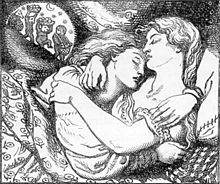
Goblin Market: Teaching Women the Dangers of Sexual Predators Since 1862


Goblin Market: Teaching Women the Dangers of Sexual Predators Since 1862


When reading the poem “Goblin Market” by Christina Rossetti, you are immediately transported into a whimsical world where little goblin men tempt young girls with the delicious fruits they sell. Naturally the goblins and their fruit aren’t as innocent and lovely as they seem. When one eats the fruit, they become dreadfully sick and yearn nothing but to taste what has brought them to such a terrible position. The end of this poem ends just as any good fairy tale should, with the characters learning a lesson with a moral included, so any other girl who finds themselves being tempted to eat fruit from goblin men knows well, to walk away and never seek them out. As much as this poem looks to be just a story for children, there are some very major clues within the poem that push the reader to discover what meanings are underlying the fairytale theme.
The beginning of the poem begins with the goblin men crying for someone to buy their fruits. The main characters Laura and Lizzie hear them, Laura appears to be curious, she knows the dangers of the goblins but wishes to pursue. Lizzie, Laura’s sister, is less obliged, knowing better not to show the goblins interest.

Laura bowed her head to hear,

Lizzie veiled her blushes:

Crouching close together

In the cooling weather,

With clasping arms and cautioning lips

With tingling cheeks and finger tips.

                                                (34-39)


These lines were my first initial clue to seeing that this poem is trying to show the dangers of women being tempted by men without courtship or marriage in mind. I imagined the goblins as men, attempting to pick up women and calling for them. The 35th line shows that Lizzie is in a way flattered or embarrassed by what the goblins are saying. Perhaps she is attempting to hide her desire being tempted by them, unlike Laura who has openly invited the goblins to call to her. At this moment both are being cautious “clasping hands” and “crouching close together” one can only feel how very vulnerable they are at this moment.

Laura then recites what she already has known well, they “must not look at goblin men” (42) or eat their fruits. In lines (44, 45) she says something interesting, “Who knows upon what soil they fed/their hungry thirsty roots?” It appears that these goblin men are being viewed as men who will satisfy their desires with any women who they can tempt into their grasps. These lines give me the idea that this poem was written with the mindset of a mother or a family member warning daughters or sisters of not falling for “goblin men” who are evil and inhuman, and want nothing but to satisfy themselves. The 44th line could suggest that not only will these men ruin a woman’s life by making her a “fallen” woman, if she gives in, but could possibly bring her diseases and sickness. In line (48) Lizzie warns her sister that she “Should not peep at goblin men”. The word “peep” further implies Laura’s desire to give into them.

“No,” said Lizzie: “No, no, no;

Their offers should not charm us,

Their evil gifts would harm us.”

                                    (64-66)


            These lines indicate what a woman of the Victorian era should desire. The goblin men offer nothing but temptation and sex; women should not be charmed by a night of sexual desire. This satisfaction is the evil gift these men are offering, which inevitably would ruin a woman for she would be unable to be wed after this. A fallen woman would be forced to work strenuous labor or revert to prostitution, another underlying warning that this poem evokes. The title of the poem itself even foreshadows all of these warnings. “Goblin Market” it could refer to the place where the “goblins”, men, seek out women for a night of satisfaction, or the marketplace that the goblins themselves have created by turning women into "fallen women": the marketplace of prostitution.

“Buy from us with a golden curl”

She clipped a precious golden lock

She dropped a tear more rare than pearl,

Then sucked their fruit globes fair or red.

                                                                                    (125-128)

            Laura has now given into the goblin men. She has given them her innocence or her virginity as represented as her golden curl, and has taken the fruit. It is something she has never experienced or tasted ever before. The last line of this stanza foreshadows the fate she will have because of this choice, a life alone.

As she turned home alone.

                                    (140)


            Laura begins to deteriorate, she wants nothing but the goblins fruit, and is unable to live her life as she had before eating the fruit. Seeing the agony that her sister is in Lizzie sets out to find the goblins and purchase fruit from them. When she finally seeks them out she offers a silver penny for fruit. This symbolizes Lizzie’s control. She refuses to fall under temptation and puts the situation into her own hands. This shows the readers that a woman has the power to make her own decisions and can refuse the powers of men. A woman is not always helpless in hopeless situations. But the goblins do not take her control lightly. At first they tempted her as they tempted Laura, but when she refused they became angry and forced themselves upon her, another situation that this poem so boldly warns women of.

One may lead a horse to water,

Twenty cannot make him drink.

Though the goblins cuffed and caught her,

Coaxed and fought her,

Bullied and besought her,

Scratched her, pinched her black as ink,

Kicked and knocked her,

Mauled and mocked her,

Lizzie uttered not a word;

Would not open lip from lip

Lest they should cram a mouthful in:

But laughed in heart to feel the drip

Of juice that syruped all her face,

                                                (422-434)

            Lizzie laughing at the goblin men, as they attempted to force their fruits in her mouth is a pinnacle moment, signifying her strength to refuse them, even when she was being tortured by them. This shows that men and women are equal in strength when it comes down to what they believe in. The first two lines of this stanza give a perfect image of Lizzie’s power and control in this scene. The goblins eventually give up on her and move along. Lizzie returns to her sister offering the juices on her face. Laura greedily sucks away the juices only to find them vile in taste. The juices became the cure to Laura’s desire. They symbolize Lizzie’s refusal to sexual desire and the want to do what’s right in terms with herself and societal views. Laura turns back to who she used to be. This part of the poem shows a glimmer of hope for fallen women, that if the proper steps are ensured, they can have a happy ending after all.

Days, weeks, months,years
Afterwards, when both were wives
With children of their own;
Their mother-hearts beset with fears,
Their lives bound up in tender lives;
Laura would call the little ones
And tell them of her early prime,
Those pleasant days long gone
Of not-returning time:
Would talk about the haunted glen,
The wicked, quaint fruit-merchant men,
Their fruits like honey to the throat,
But poison in the blood;
(Men sell not such in any town;)
Would tell them how her sister stood
In deadly peril to do her good,
And win the fiery antidote:
Then joining hands to little hands
Would bid them cling together,
"For there is no friend like a sister,
In calm or stormy weather,
To cheer one on the tedious way,
To fetch one if one goes astray,
To lift one if one totters down,
To strengthen whilst one stands."

                                                                        (543-567)

            Both Lizzie and Laura become mothers and wives, which was what every woman would want in the Victorian era. Laura had fallen and yet she was able to have a good life, this is hope for all women who have fallen that they still have a chance to have the desired life. Not only do I find that the moral of this story is to help your friends and family when they are in a dark place, and to not give into temptation, but to also learn from mistakes made and to not allow those mistakes to define you as who you really are. I feel that this poem can easily transfer to women of every era, because regardless of what the desired life style is it is true for every one of every age of time to never forget those who really love you, and to be in ontrol of your own life and not fall into temptation that could ruin it.